Story by Luigi Ananìa
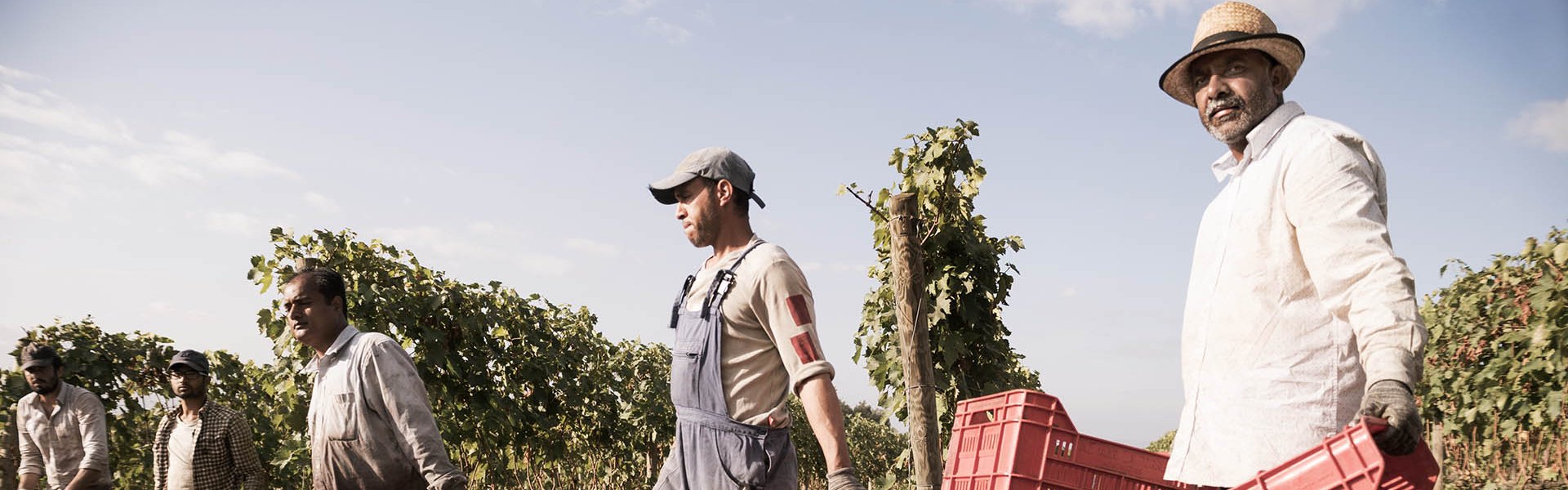
Picture by Giulia Novelli
La Torre estate was founded in 1976 by Giuseppe Ananìa, who purchased La Torre property from a family in Montalcino. Until just a few years prior, La Torre was a sharecropping farm with livestock, cherry trees, wheat crops, and mixed olive and vineyard cultivation.
When I arrived with my father, the local farmers spoke of Podere La Torre as a hill famous for its vipers, mushrooms, olive oil, and elegant, fragrant wine. At the top was a large stone farmhouse, surrounded by thickets of brambles, broom, and holm oaks.
My father planted the first vineyard of two and a half hectares in 1976; later, in 1990 and 1999, I planted three more hectares so now the vineyard is about 5.8 hectares, enclosing the house to the west and south. The house, home to eighteen people during the sharecropping era, includes cellars for grape processing and wine aging.
When my father and I arrived in Montalcino, there was a legend about the name “La Torre”, claiming that beside the farmhouse stood a tower owned by the family before the ones who sold us the property. The legend said that at some point part of this family discovered gold hidden in the tower's foundations, demolished the building to get the gold, and fled to Florence. There is actually a street in Florence named after them, but I can’t say whether it’s linked to the same family or if the tower and gold ever existed, where now lies a Brunello vineyard.
In 1976, when my father planted the first vines, Montalcino was still a farming community and Brunello di Montalcino wine was known only to a few connoisseurs. Then, in the 1980s, the media transformed wine from a rural product into a media phenomenon, making Brunello famous for many. In those years, large Brunello producers emerged, promoted their wines in Italy and beyond, and gained visibility through media.
My father and I arrived just before a huge transformation, not only from farm product to media product, but also with scientific advances in winemaking and the first computer systems in wineries.
My business philosophy, agreed with my father, was to combine the techniques learned during my agriculture degree in Florence with the wisdom of local old farmers, renowned for their passion and meticulous care of vines and wine.
Maintaining relationships with local farmers proved key to staying connected to the land and producing typical wines, preserving ties to the soil of Montalcino and Podere La Torre. Indeed, in those fast-changing times, wineries risked losing their roots, focusing more on cellars than vineyards, using homogenizing techniques common all over Italy.
The relationship with the land, the terroir, must remain flexible and dynamic, never rigid or dogmatic. This means it’s plausible for Montalcino to host new grape varieties, as human migration has always brought grapes from afar (like Alicante from Spain in the 16th century), but always keeping in mind native and forgotten grapes for a broad respect for all forms of life, existing and worthy of existence.
The last wine I created is called Ampelio, perhaps the clearest example of these ideas. It’s made from three native grapes: Alicante, Ciliegiolo, and Sangiovese (the latter cultivated since Etruscan times, the others introduced later from abroad). The name Ampelio, like other now-vanishing rural place names (Ampelio, Saturno, Alisardo, Giocondo, Olmo, etc.), honors an old farmer friend whose hands moved over the vines like an artist, instantly sensing the balance between grace and necessity.